
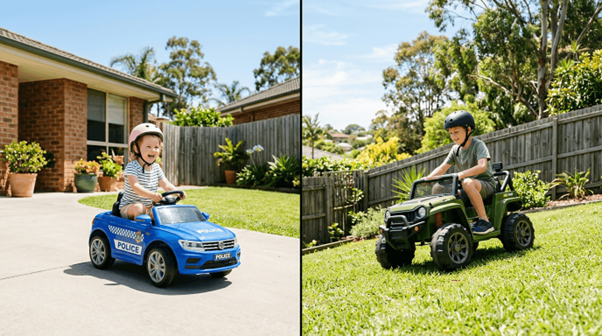
So you're looking at ride-on cars for your kid and you've spotted two options: a 24V and a 36V. Same style, similar price range but different voltages. What does that actually mean, and does it matter?
The short answer: yes, it does matter. The voltage determines how fast the car goes, what kind of terrain it can handle, and whether it's the right fit for your child's age and confidence level. This guide breaks it all down so you can make the right call without the guesswork.
What Does the Voltage Actually Mean?
The "V" stands for volts, and it refers to the power of the battery. A higher voltage means more power which translates to faster speeds, better performance on uneven ground, and a motor that doesn't struggle as much under load (like on grass or a slight incline).
Think of it like this: a 24V is the reliable family sedan, and a 36V is the SUV with a bit more grunt. Both get the job done, but they're built for different drivers.
Speed: How Fast Will Your Child Actually Go?
This is usually the first thing parents want to know and fair enough.
- 24V ride-on cars typically reach speeds of 6–7 km/h (some models up to 8 km/h). That's a brisk walking pace fast enough to be fun, slow enough that you won't be having a heart attack watching from the back porch.
- 36V ride-on cars can reach 12–15 km/h, which is a noticeable step up. At that speed, your child is moving at a decent clip great for older kids who are confident riders, but not ideal for little ones still getting the hang of steering.
Most ride-on cars also come with multiple speed settings (usually low, medium, and high), so you can start conservatively and work up as your child gains confidence.
Quick Comparison: 24V vs 36V at a Glance
|
Feature |
24V Ride-On Car |
36V Ride-On Car |
|
Recommended Age |
3–7 years |
6–10+ years |
|
Top Speed |
6–8 km/h |
12–15 km/h |
|
Best Terrain |
Flat surfaces, driveways, footpaths |
Grass, gravel, slight inclines, rougher ground |
|
Battery Life |
1–2 hours |
1–2 hours |
|
Weight Limit |
Up to 50–55 kg |
Up to 65–80 kg |
|
Parental Remote Control |
Common |
Less common |
|
Safety Gear Needed |
Recommended |
Helmet + pads strongly recommended |
|
Best For |
Beginners, younger children |
Confident riders, older children |
Age and Skill Level: The Most Important Factor
Voltage numbers aside, the biggest thing to get right is matching the car to where your child is at developmentally.
24V is the right choice if your child is:
- Between 3 and 7 years old
- New to ride-on cars or still building confidence
- Riding primarily on flat, smooth surfaces like the driveway or a backyard path
- The kind of kid you'd prefer to have a remote override for (many 24V models include a parental remote control genuinely handy)
36V makes more sense if your child is:
- 6 years or older and already comfortable on a ride-on
- Heavier or taller, approaching the weight limit of most 24V models
- Keen to ride on grass, dirt, gravel, or through the backyard with more varied terrain
- Ready for more speed and a bigger riding experience
One thing worth noting: if your child has never used a ride-on car before, starting with a 24V regardless of their age is a smart move. Getting used to the controls, braking, and steering takes time and doing that at 6–7 km/h is a lot more forgiving than at 15 km/h.
Terrain: Where Will They Be Riding?
This is something a lot of parents overlook until after the purchase.
24V cars perform best on smooth, flat surfaces. Think sealed driveways, footpaths, or a well-maintained lawn. Put them on loose gravel or a bumpy backyard and the motor will work harder, drain the battery faster, and potentially struggle to keep moving.
36V cars are built for more demanding conditions. They handle grass, compacted dirt, and gentle slopes without breaking a sweat. If your backyard isn't perfectly flat and most Australian backyards aren't the extra power of a 36V becomes genuinely useful rather than just a "nice to have."
Battery Life: Will It Last the Afternoon?
Both 24V and 36V ride-on cars typically offer around 1 to 2 hours of riding time on a full charge. The difference is that a 36V car working harder on rough terrain will drain its battery faster than a 24V cruising on a flat driveway.
Charging time usually sits between 8–12 hours, so it's worth plugging in overnight after a big session. If your child tends to use their ride-on heavily on weekends, having a spare battery is worth considering it means the fun doesn't stop just because the battery does.
A tip for looking after the battery: don't leave it completely flat for extended periods. Even during school holidays when the car isn't being used much, a top-up charge every few weeks will help extend battery life.
Safety: What Should Parents Know?
Both options are safe when used appropriately, but the approach differs.
With a 24V car, the lower speed means there's more room for error. Many models include a parental remote control, which lets you take over steering or stop the car if things get wobbly. This is especially reassuring for younger children who are still learning. Built-in speed limiters are also common on 24V models.
With a 36V car, the higher speeds mean safety gear becomes non-negotiable. A well-fitting helmet is the minimum. Knee and elbow pads are a good idea for younger or less experienced riders using a 36V. Adult supervision is also important at least until you're confident your child can handle the car at its higher speeds.
Regardless of voltage, always set up a clear riding area away from roads, driveways shared with cars, steps, and pools.
Browse Our 24V Ride on Cars Collection Here
Weight and Size: Does It Matter?
Yes - and it's easy to overlook.
24V cars are generally designed for children up to around 50–55 kg. If your child is on the heavier end or likely to grow into the car over the next year or two, they may hit the weight limit sooner than you'd expect.
36V cars support higher weight limits, often up to 65–80 kg depending on the model. They're also physically larger, which suits older kids better. Heavier riders will experience some speed reduction on any ride-on, but 36V motors handle the load better than 24V ones.
So, Which One Should You Buy?

Here's the straightforward version:
Choose a 24V if your child is under 7, new to ride-ons, or you want something manageable with parental controls. It's the safer, more beginner-friendly option and handles the typical suburban backyard perfectly well.
Choose a 36V if your child is older, already confident on a ride-on, on the heavier side, or you have a bigger outdoor space with varied terrain. The extra power makes for a noticeably better experience once kids are ready for it.
When in doubt, the 24V is the lower-risk starting point and you can always upgrade in future.



Leave a comment
This site is protected by hCaptcha and the hCaptcha Privacy Policy and Terms of Service apply.